
Magnetic Particle Inspection (MPI) Services
Detect surface and near-surface defects before they become failures.
At Qualiss, we provide accredited Magnetic Particle Inspection (MPI) services across Brisbane, Gold Coast, Sunshine Coast, and regional Queensland and New South Wales. MPI is a fast, reliable, and cost-effective non-destructive testing method for detecting cracks, seams, laps, and other defects in ferromagnetic materials — ensuring your assets remain safe, compliant, and operational.
What is Magnetic Particle Inspection?
Magnetic Particle Inspection (MPI) is a non-destructive testing (NDT) technique used to locate surface and near-surface defects in ferromagnetic materials such as steel and iron.
The MPI process involves:
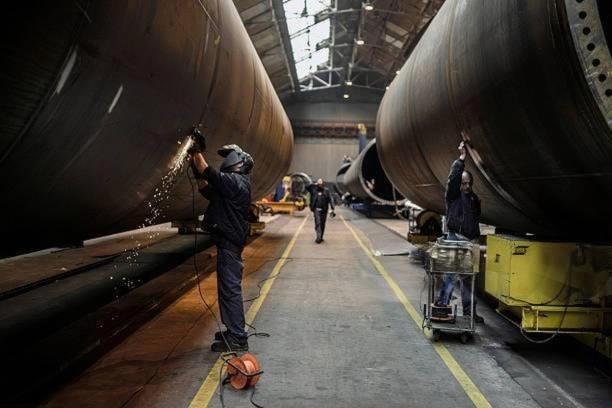
Pre-cleaning – Removing oil, paint, rust, or debris to ensure accurate inspection.
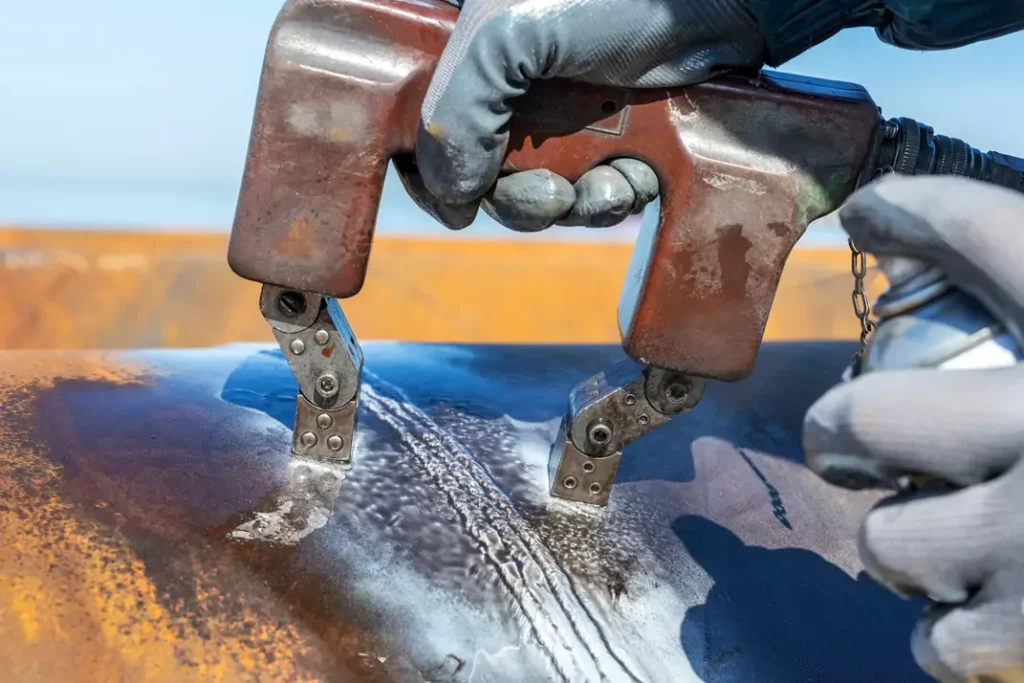
Magnetising the component – Using an electric current or permanent magnet to create a magnetic field.
Applying magnetic particles – Fine iron particles (dry or suspended in liquid) are applied to the surface.
Inspection – Defects disturb the magnetic field, causing particles to cluster and form visible indications of cracks or other flaws.
Post-cleaning & Demagnetisation – Components are cleaned, and magnetisation is removed if necessary to restore original properties.
MPI is widely used to inspect welds, castings, forgings, and structural steel, providing reliable and visible results that help prevent failures.
Applications of MPI in Industry
Qualiss MPI services are trusted across multiple sectors:
Marine & Offshore – hull weld inspections, masts, rig components, and corrosion detection.
Oil & Gas – pipeline welds, pressure vessels, storage tanks.
Construction & Infrastructure – steel beams, bridges, and structural components.
Energy & Power – turbine shafts, boiler tubes, and plant equipment.
Manufacturing & Fabrication – castings, forgings, assembly welds.
Real-world impact: MPI helps prevent costly downtime, equipment failure, and safety hazards by identifying flaws before they escalate.
Benefits of Magnetic Particle Inspection
High Sensitivity – Detects cracks and defects invisible to the naked eye.
Cost-Effective – Quick inspection reduces downtime and maintenance costs.
On-Site Capability – Portable equipment allows inspections in factories, vessels, and offshore rigs.
Non-Destructive – Maintains component integrity while providing reliable results.
Visual Evidence – Defects are clearly visible for rapid decision-making and reporting.
Limitations of MPI
Only works on ferromagnetic materials like steel and iron.
Requires a clean surface for best results.
Limited penetration depth — best for surface and near-surface defects.
Our certified technicians mitigate these limitations through expertise, advanced equipment, and strict adherence to accredited procedures.
FAQs – Magnetic Particle Inspection
Q: What materials can MPI inspect?
A: MPI works on ferromagnetic materials, including steel, iron, and some nickel alloys. Non-ferromagnetic materials require alternative methods like dye penetrant testing or ultrasonic testing.Q: Is MPI safe for operators and the environment?
A: Yes. MPI is non-destructive, uses non-toxic magnetic particles (with proper handling), and complies with WHS safety standards.Q: Can MPI be performed on-site?
A: Absolutely. Portable equipment allows inspections on vessels, pipelines, construction sites, and offshore rigs.Q: What defects does MPI detect?
A: MPI identifies surface and near-surface cracks, seams, laps, porosity, and weld defects.Q: What are the advantages of wet vs dry MPI?
A: Wet MPI (liquid particles) offers higher sensitivity for fine cracks; dry MPI is convenient for field inspections and rough surfaces.